“Implement AI,”
they keep saying.
Said by everyone, explained by no one. I audit how your business actually runs, then I build the software that runs it better. AI included exactly where it earns its place.
The people building AI all preach the same sermon.
Thinking-work is becoming a utility. Like electricity, you will buy it on tap.
Sam Altman has written about intelligence becoming too cheap to meter. Elon Musk talks about AI eventually doing most of what people do for work. Strip away the theatre and the claim underneath is the same: reading, sorting, drafting, checking and deciding are becoming things you buy in any quantity, on demand.
The businesses that pull ahead will not be the ones that bought a chatbot. They will be the ones that re-examined how they operate while their competitors were still forwarding each other headlines. The wins compound quietly: an hour returned to each person each week, quotes out the same day instead of Thursday, one re-key gone forever. Multiplied across a payroll and a year, boring improvements become serious money. That is why I would rather find five percent across twenty people than promise fifty percent to one. So “implement AI” is the wrong instruction. The right one: audit the operation, then place the right machinery.
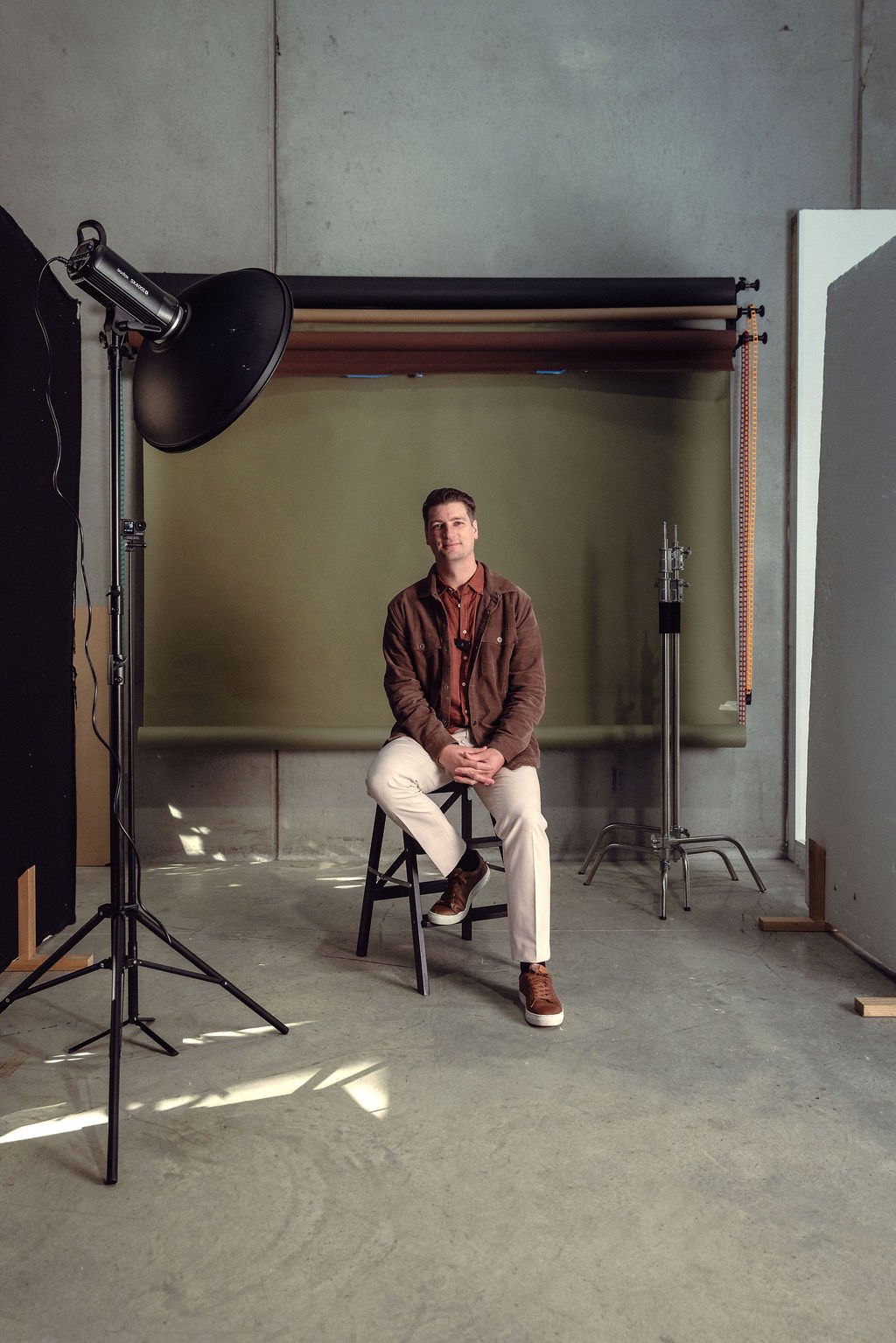
Processes were my profession before AI was my tool.
I spent a decade making high-stakes calls where calm and correct mattered: intensive care, emergency departments, and the back of an ambulance. Then I built the quality function for a national occupational-health group, from a blank page to ISO 9001, ISO 45001 and NATA accreditation, and trained the staff who ran it. Finding the inefficiency in an operation and making the fix stick has been the job the whole way through.
Since then I have run my own businesses: a photography studio through more than 200 weddings, then the three below. I know what an unnecessary process costs, because I have paid for it.
For the last two years I have been all-in on AI, not as a spectator with opinions but as an operator with products in market. That combination, process discipline plus hands-on AI capability, is what walks into your business on day one.
You have been writing a job ad in your head.
Someone fluent in the new tools. Someone who could harden the half-built ideas, guard the spend, and bring your people along. Every business is hunting that same rare person right now, at a premium. Here is the list you would write, translated line by line.
If that reads like the ad you were halfway to writing, good. It is a fair description of how I work, and the rest of this page is the evidence. It is also what I am: a Claude Code specialist. The open question is whether you employ that list or engage it. We get to that further down.
“AI” splits into three kinds of machinery. Most people are only ever sold one.
Every idea on your whiteboard, and everything a consultant will ever pitch you, is one of these three. Sorting your business into them is the audit, and where every engagement begins.
Systems that run themselves
Reliable, custom-built software: bookings, quoting, invoicing, job flows, approvals. No AI inside, but AI built it, which is why it now costs weeks instead of quarters.
Judgement as equations
Decisions your people make by feel, rewritten as calibrated maths: objective, instant, costing nothing to re-run, and the same answer every time. AI designs the equations; they run without it.
Language by machine
Generative AI, used surgically where words and judgement are the work: drafting, reviewing, summarising, checking against your rules.
I hold my own products to this discipline and publish the audit: every place a model is and is not allowed. Read the technical analysis or send it to whoever checks these things for you.
Now run it on your business.
Before I take on any consultation I need to understand the business, and this is the fastest way for both of us. Write a few honest sentences about what eats your team’s time: the sort splits it into the three kinds of machinery, with what I’d likely build for each.
Rough shape:
Thirty minutes of your time. Then a plan, priced.
A conversation
You talk about the business: what it is, where the hours go, and what you imagine AI might enhance. No deck, no jargon.
The sort
Everything you want, and a few things you have not thought of, sorted into the three kinds of machinery. Most businesses discover their AI problem is mostly a software problem. Good news: software is cheaper, faster and never makes things up.
A scoped, plain-English quote
A fixed proposal for an implementation: what gets built, what it replaces, what it costs, and how you will know it worked. The yardstick is hours returned per person, per week.
The build
Designed, built and bedded in by directing Claude Code, with data governance and Australian privacy designed in from day one, not bolted on: the way I once treated clinical quality systems. A complete online store. An email review system. Internal tools that replace the spreadsheet everything secretly runs on. If your industry needs something I have not built before, I will learn it. That is the job now.
The aim is not “AI in your business.” It is your business with the drag taken out, and a system underneath it that your competitors cannot buy off the shelf.
Hire the role, or buy the outcome?
Some businesses should hire. If software is your product, if things change daily, if the roadmap never ends: employ an AI-native engineer, pay them well, and count yourself lucky to have found one.
For most established businesses, the maths runs the other way. You do not need an AI specialist at every Monday stand-up. You need one to arrive, rebuild the thing properly, and leave you owning it. A defined engagement with an end date, not a salary line that never closes.
Every engagement runs that arc. The two stages the cheap end of the market skips are documentation and handover, and they are what make the system yours instead of mine.
Built to need no teaching
If software needs a prompt-engineering course, it was built wrong. Everything I ship runs on plain language and simple controls, the way Heirloom Prints’ back office does.
Improves as models improve
The AI inside is swappable by design. When a better model ships, it drops into place and the whole system gets sharper.
Yours when I leave
Documented and handed over in your language, not developer-speak, so your team can run it and gain from it long after the engagement ends.
You could build it yourself. Genuinely.
Tools like Base44 and Lovable, or Claude in your own hands, can produce a working app in an afternoon. Plenty of owners do exactly that: they build a prototype, prove the idea, then hit the ceiling where real money and real customers arrive.
That ceiling is where I work. From your prototype, or from a blank page, to something robust, defendable and woven into the way your business already runs.
A word on fit. I take on a small number of substantial builds, mostly for operations with twenty to two hundred staff and complex daily job flows. At that size a single percentage point of efficiency is real money: across twenty staff, two hours saved each a week is a full salary of reclaimed capacity every year. If that is your scale, we should talk.
If the whole job is a weekly posting schedule, you do not need me, and I will say so inside the first ten minutes. That honesty runs both ways: if I cannot see a build that pays for itself, I will tell you that too.
Real products. Live and in market.
Before I looked at anyone else’s business, I built my own. Different problems, different stacks, one person. The range is the point.
Tention
The most personal way to show up online.
An AI-native content platform for busy professionals: answer one question on your phone, and it films, edits, brand-checks and posts across up to eleven platforms. Built end to end.
Heirloom Prints
Museum-quality prints, made accessible.
A premium fine-art print and framing store for photographers and their clients: product configurator, checkout, automated invoicing, a commission program for partners, and the admin behind it. A complete commerce operation.
Bohemia Bay Studio
A business that runs itself.
A self-access photography studio, automated end to end. Live booking, online payment, automated door access and self-serve rescheduling, trading 365 days a year with no staff on site. My input is about an hour a week.
A decade ago, each of these needed a team, a budget and a year. Directing Claude, I shipped each one without the team, the budget or the year. Bringing that shift to established businesses is what I do.
It starts with thirty minutes.
Bring the business. I will bring the questions. By the end of the call you will have a clear view of what your “AI opportunity” actually is, whether or not we ever work together.